
When the FT covers a vending machine, something has shifted.
Earlier this summer, Otherwander Soho opened on Dean Street in London. 566 pods, no front desk, no reception. Guests check in on their phone, unlock the building with a QR Wanderpass stored in their digital wallet, and move through the entire stay without a single traditional touchpoint. When Otherwander CEO Fredrik Korallus called and asked how far we’d go, he didn’t have to ask twice.
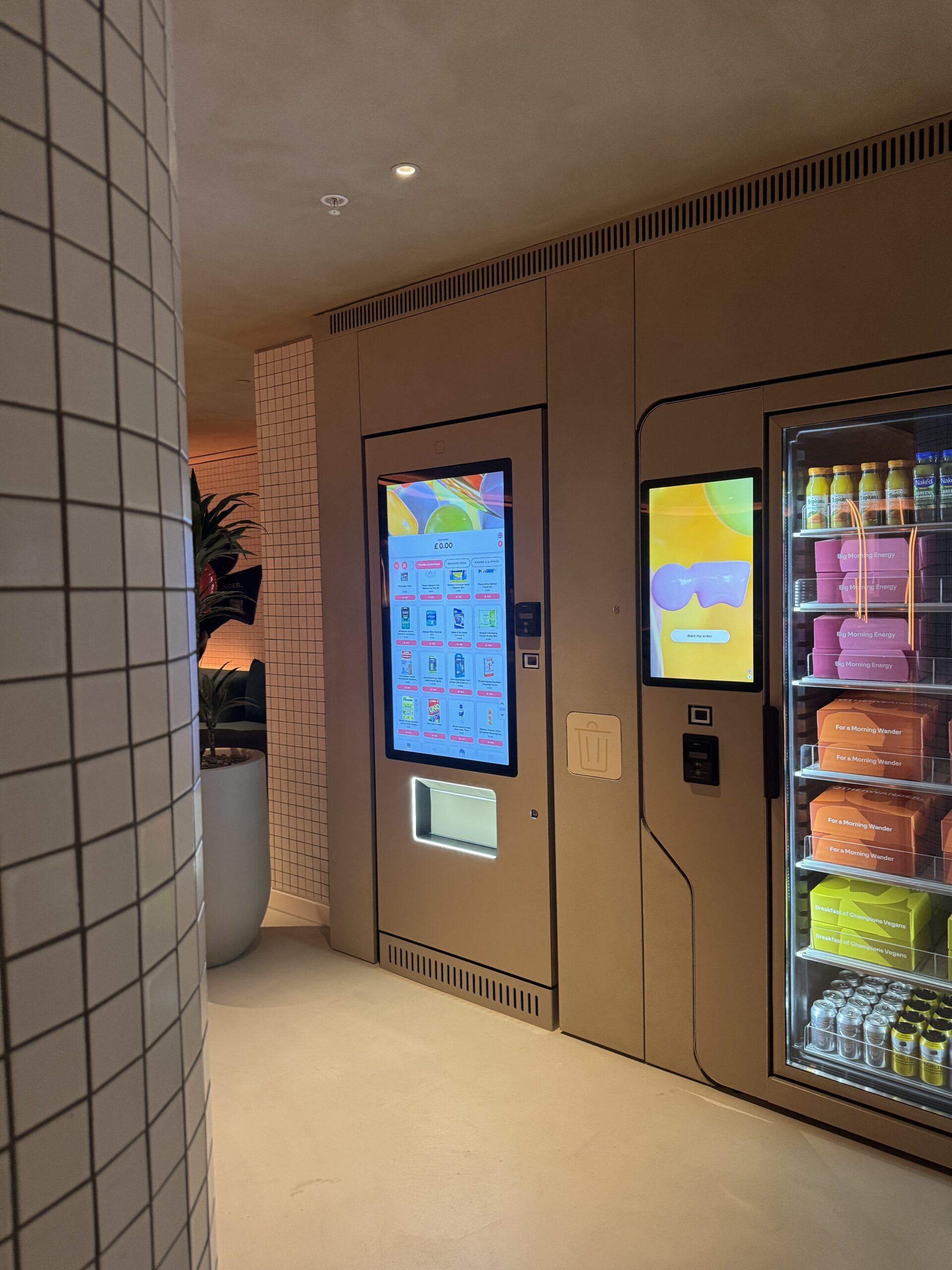
Boost inc powered the unattended retail infrastructure at Otherwander Soho. And we went further than we’ve gone before.
What we built
This wasn’t a standard deployment. Fredrik’s brief was simple: remove friction. Every decision we made served that goal.
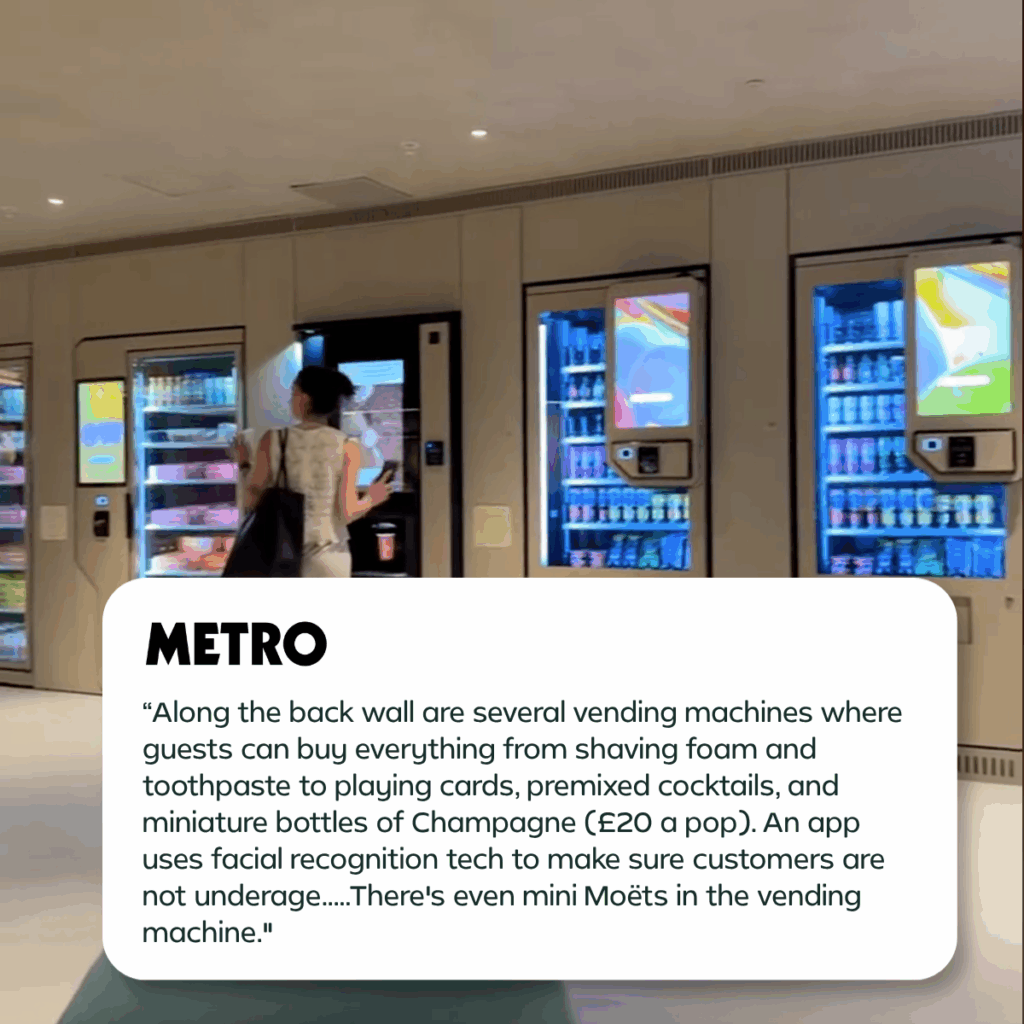
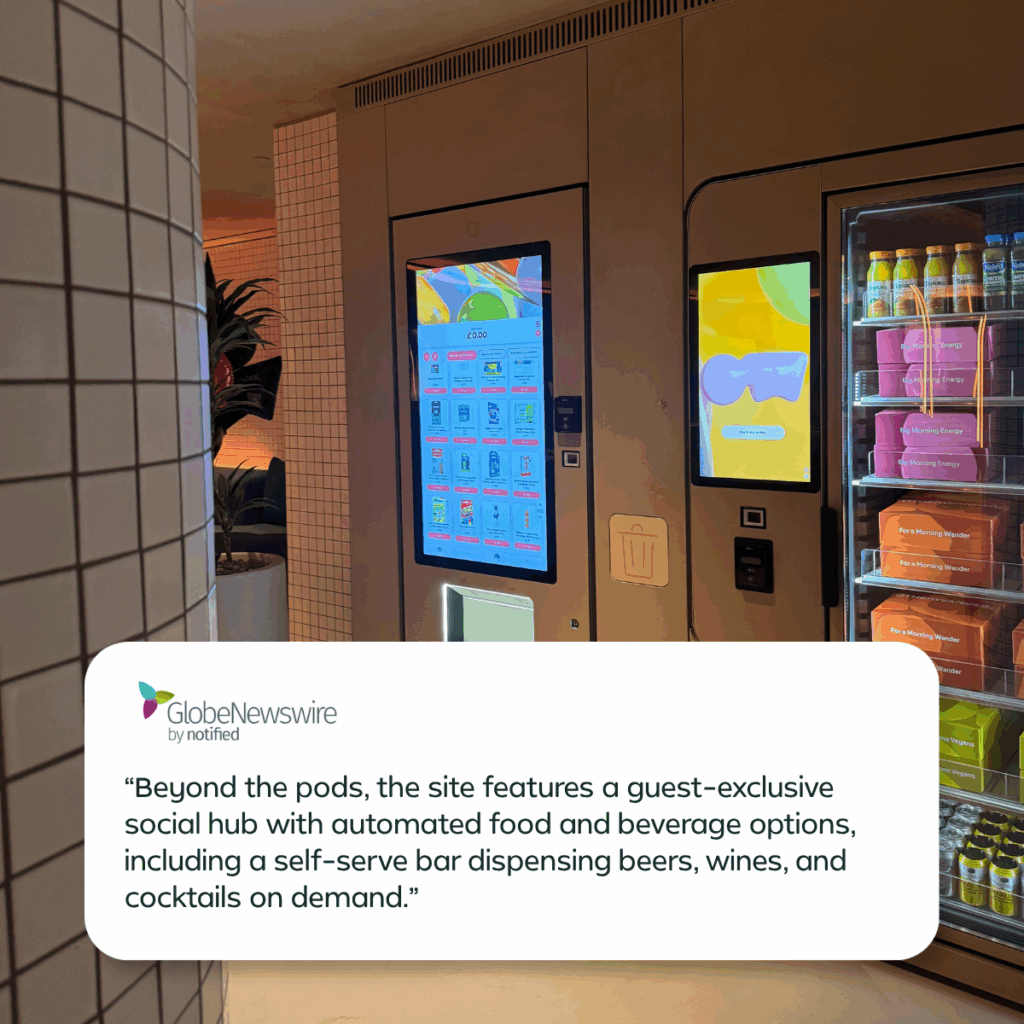
RFID towel vending. Age verification using facial recognition at the point of sale. A range spanning USB plugs, specialty coffee, premixed cocktails, and miniature Champagne at £20 a pop. A self-serve bar running around the clock. Every product a guest might need, available at any hour, without any human intervention required.
The machines aren’t in the corner. They are the hospitality.
What the press made of it
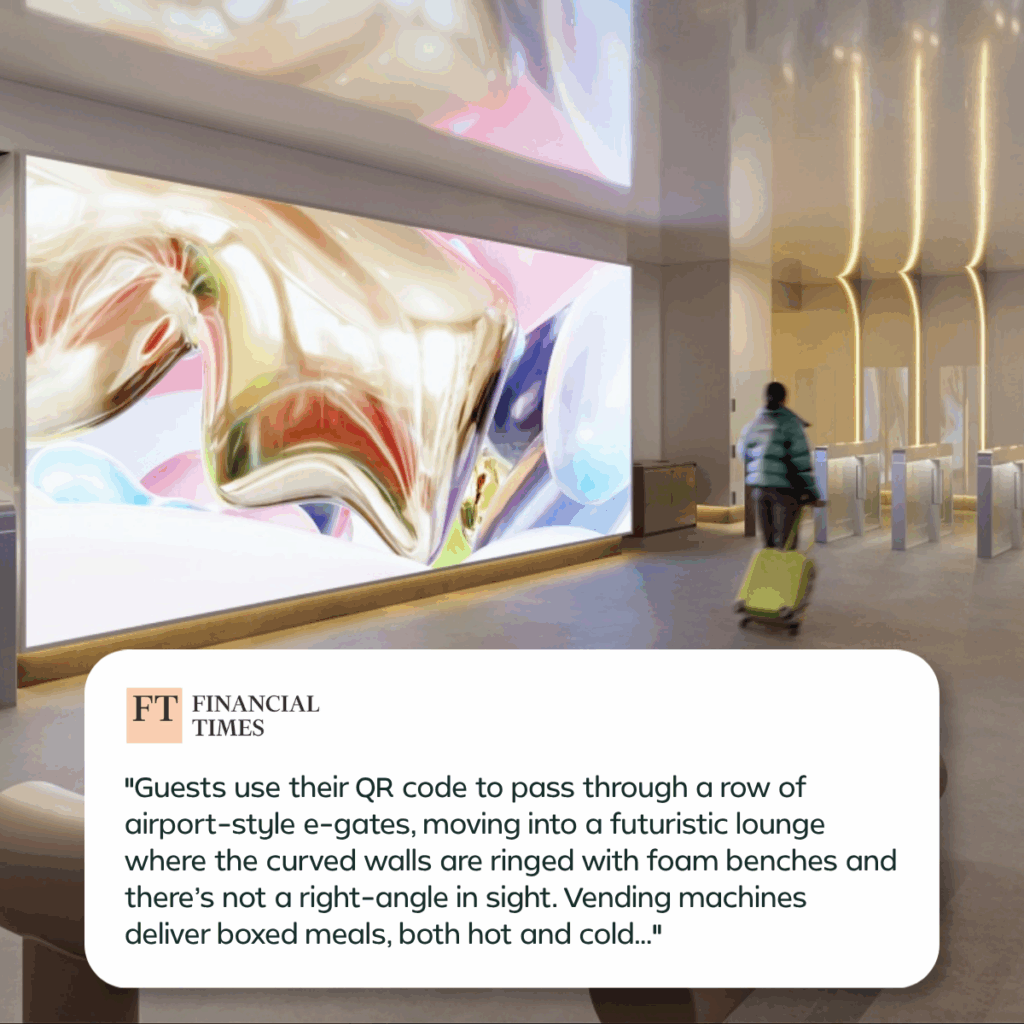
The national press took notice. The Financial Times walked through and called it “the future of budget travel.” Metro sent a journalist to spend the night and she zeroed in on the vending offer almost immediately: along the back wall, she found machines selling everything from shaving foam to playing cards, premixed cocktails to miniature bottles of Champagne at £20 a pop. An app uses facial recognition to make sure buyers are of legal age.
The Telegraph ran its review under the headline: “My night at London’s first staffless hotel.”
That’s not trade coverage. That’s mainstream validation of a concept that unattended retail made possible.
So why does this matter to us?
Because Otherwander has done something that most venues haven’t: it’s put unattended retail at the centre of the guest experience, not the corner.
This isn’t a vending machine propped up next to an ice bucket at the end of a corridor. It’s the F&B strategy. The revenue layer. The hospitality. When a guest wants a drink at midnight, a coffee at 6am, or a toothbrush because they forgot theirs, the machine is the answer. And it works. Metro’s reviewer, despite some gentle scepticism about the “staffless” concept, found herself nipping downstairs for a dental kit at midnight without a second thought.
That’s what good unattended retail does. It removes friction, creates new commercial opportunities, and serves customers at hours and in ways that staffed models simply can’t.
This is what the new era of venues looks like
Hospitality, travel, workspace, healthcare. Across every venue category, operators are under pressure to do more with less. Reduce costs, extend service hours, meet rising consumer expectations. The operators who are winning are the ones building smarter commercial infrastructure, not just cutting spend.
Otherwander is a good example of what’s possible when a venue is designed around unattended retail from the ground up, rather than bolted on as an afterthought. The result is a concept that’s commercially strong enough to earn coverage in the Financial Times, and interesting enough that people are genuinely curious about staying there.
The operators building for that future are the ones asking the same kind of question Fredrik asked us: how far can this go?
Turns out: further than anyone expected.
We work with venues across Europe who are on this same journey. Whether you’re running a hotel, a gym, a co-working space, or a stadium, there’s a version of this that makes sense for your business. We help you figure out what it looks like: the hardware, the software, the range, and the data that ties it all together.
If the Otherwander story got you thinking, we’d love to talk. Get in touch.